When spring finally arrives in the Willamette Valley it’s tempting to begin purchasing seeds and seedlings with little to no forethought about how many plants you will need, what kinds thrive in your area or where exactly you will plant them.
But that kind of spontaneity can be a mistake – according to Ray Temple, a retired biologist and life-long vegetable gardener – who suggests that time spent planning a garden, in late winter or early spring, will not only increase its success but your enjoyment of the experience as well.
What to plant?
According to Temple, the first question to ask yourself is, “What will we actually eat from a garden? Then, that shapes everything downstream.”
Because, as Temple discovered by growing vegetables for his own family, not everything that is fun to grow is something you will want to eat.
“When we lived in Silverton… we grew fava beans,” he remembered. “And I found out, the kids didn’t like them. But gardening is not a static endeavor. You go out and try stuff.”
When to plant?
Once you have established what you are going to plant, you need to make a schedule of what needs to go into the ground when.
“Done well, you can kind of sequence your planting,” Temple said. “If you keep careful notes, it’ll become kind of an art.”
Information about planting for your particular climate zone is available through the OSU Extension Service’s Master Gardener program’s website (www.extension.oregonstate.edu/mg), on individual seed packets and in the garden manual, Growing Vegetables West of the Cascades, which Temple highly recommends.
“It’s an excellent publication,” he pointed out. “It talks about soil amendments and growing instructions. Then, if you have the Master Gardener’s [website] that gives you access to real people.”
Because there are gardening decisions that must be faced every step of the way.
“You need to decide what plants you’re going to grow from seed and what you’re going to get from the nursery,” Temple said, then you must research whether those seeds can be directly sown into the ground (like peas, beans, greens, carrots or garlic) or planted as seedlings like tomatoes, squash and melons.
“You’re really asking, is it warm enough?” Temple said. “So, pay attention to the planting instructions on the packet.” And use them to make a detailed schedule of exactly what type of plant, in what form, will be planted and when.
Where to plant?

Once your list of plants is compiled, it’s time to choose a garden site, one of the most important decisions a gardener will make.
“You’re looking for a spot that gets plenty of sun,” Temple said. “And that won’t be shaded out in five years.”
You should also avoid any areas that are perennially wet.
“But you want a plan for water,” Temple added, explaining that the best method for watering plants is a drip irrigation system. “Because, a bucket brigade? I don’t think so!”
And overhead watering, via sprinkler, does not address the diverse water needs of a garden and can lead to disease.
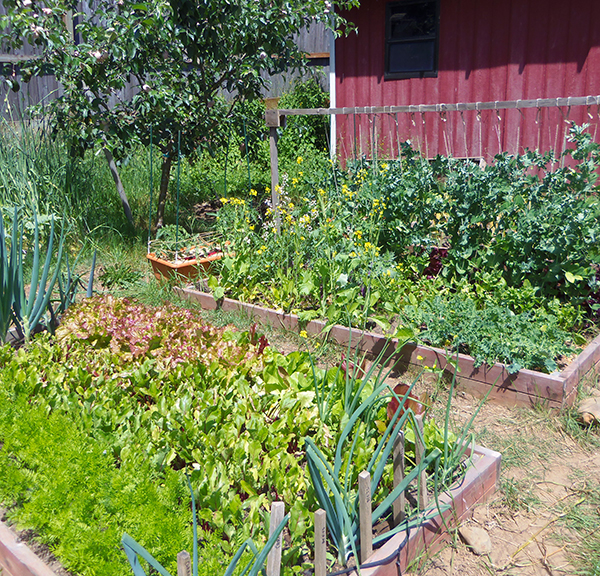
“Then think about how you’re going to organize,” Temple said. “The best is in units – raised beds, rows or zones.” Or a combination of all three.
Finally, once the format is established, Temple suggests having your soil evaluated to determine how much and what type of amendments are needed.
“Amending the soil early is an important thing to do,” Temple said, particularly if the home is a new one with soil that was recently disturbed.
“That soil is going to be terrible,” Temple confirmed. “But there is good information at the Extension Service about soil amendment.”
Planting in early spring
Once the soil is prepared, you are ready to begin planting root vegetables, greens and peas directly into the garden in early spring, but you must wait to plant seedlings like tomatoes, squash and melons until the soil has warmed and the threat of an overnight frost has passed.
“A soil thermometer for $14 or so at a nursery is handy to figuring out whether you should put a particular seed in the ground,” Temple said. “But maybe you start some seeds under lights before you put them out.”
Deterring pests
Once your seeds begin to sprout, it’s important to monitor for slugs – which are a problem during the early spring – or, better yet, prior to planting, place a copper barrier around each plant.
“A passive deterrent is best,” Temple said of this method, which has proved successful in the past. Adding, “You can also look into companion planting.” That’s a method of gardening that discourages pests and encourages pollinators through the addition of certain flowers and herbs like basil, marigolds, nasturtium, rosemary, mint, dill, chives and sunflowers.
Fertilizing
As your plants continue to grow, it is also necessary to begin fertilizing the soil around them.
“I use an organic fertilizer mix of bone meal, trace elements and lime,” Temple said. Adding that, once again, it is important to “look at the seed packet instructions, which tell you when to fertilize and with what.”
“Like anything,” Temple said, “the more you know about the plants you’re going to manage, the better you’ll do.”
Setting up a watering system
The same is true when it comes to watering – each plant has a different need.
“I think drip is the way to go,” Temple said, explaining how the various attachments – drippers, misters and sprinklers – allow gardeners to tailor each watering system to the plants they grow.
“Soaker hoses work great,” Temple added, “but they degrade after a couple of seasons.”
And no matter what system you choose, you will need timers.
“That’s really key to having your garden taken care of in the summer,” Temple said.
It’s a process that can seem overwhelming in its complexity, but Temple suggests visiting the Dig Corp website (www.digcorp.com) which provides a wealth of information and videos on everything from basic systems for container gardens to complex systems for large gardens.
“One thing to keep in mind… whatever brand you buy, you have to buy the same fittings,” Temple cautioned. “But it helps with disease problems, saves water and you can hook it up to timers.”
Looking forward to summer
With so many steps involved in putting in a vegetable garden it can feel overwhelming, which is why Temple suggests keeping notes along the way.
“Like, why did it fail? Was it something I did? Did they not get enough water? Any of those you can rectify,” Temple said.
Because gardening is filled with experimentation and the successes are delicious.