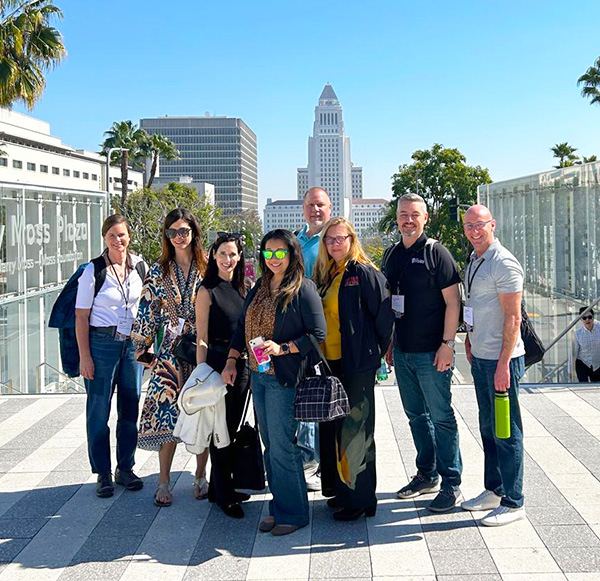
Melissa Baurer, Santiam Hospital & Clinics’ director of integration health and outreach, recently returned from a four-day trip to Los Angeles for a gathering of officials who have dealt with megafires.
Baurer was in LA from Feb. 24-28 and witnessed the damage from the Palisades and Eaton fires, which combined to destroy more than 16,000 structures and kill 29 people after igniting Jan. 7 amid fierce Santa Ana winds.
Baurer has worked on integration efforts and disaster case management in the Santiam Canyon after the 2020 fires, which burned 400,000 acres, destroyed more than 1,500 structures and killed five people. Detroit and Gates were nearly leveled by the fires, with Mill City, Lyons, Idanha and the Elkhorn/North Fork area also suffering significant damage.

Baurer was invited to Southern California by officials with After the Fire USA, a nonprofit organization formed by megafire survivors to support communities of all sizes prepare for wildfires and recover, rebuild, and reimagine a more resilient future after a wildfire.
“It was hard to see the magnitude of devastation,” Baurer told Our Town. “This was my first time seeing communities in person that were survivors of a megafire since our Santiam Canyon 2020 Labor Day fires (and) it was harder than I expected.”
Baurer added that she was “grateful for the team who surrounded me, walking with me through the experience. I left with an extreme amount of gratitude for the first-responders, grass roots efforts, and the human kindness that is demonstrated at unfortunate times.”
Baurer also said that Oregon fires and LA fires are very different and that each fire is unique.
“However, each fire has similar experiences. I heard frustrations on evacuation notices, challenges in navigating FEMA, not knowing how to close the financial gap in rebuilding, and gratefulness for those stepping up to support and lead the recovery.”
A new organization, Department of Angels, has formed in Southern California that is designed to perform some of the same recovery functions as Santiam Hospital’s service integration team in the Santiam Canyon.
“Their role,” Baurer said, “is providing project management, facilitating community organizing, connecting communities to each other, and investing in and supporting expert-informed solutions to shape our collective future. Department of Angels has similar goals as Santiam Service Integration of building relationships, reducing duplication of services, and coordinating/facilitating organizations.”
Baurer related one personal story from the visit.
“Our delegation walked into a restaurant and a member asked the owner of the restaurant how he was doing. He replied that he hated FEMA, he was frustrated (and) living in his car after losing his home. It was beautiful to see how quickly our delegation members responded to his situation. My personal role (was) to connect him right then and there to Patti Silbernagel, past DCM of Santiam, current community health worker in our ER who submitted his appeal to FEMA during the time we were eating lunch.
“This gentleman (said) that he contacted FEMA 13 times. We were in the right place at the right time. He needed our help, and we needed to be able to help.”
Baurer said she “will be continuing to support Department of Angels as they move forward with this mission, providing them with resources and knowledge that I have in facilitating coordination and building trusting relationships. Our Santiam team is eager to offer any additional support.
“I am in early conversations with a group in LA to see if we can provide FEMA navigation and/or disaster case management training to their team of case managers/navigators. It’s a duty and honor to pass along any knowledge gained from our experience here in the Canyon. We all have a purpose. We all have talents or skills and it’s important that we utilize those to help others.”